
Caring for Outdoor Wood: Protecting the Material, Respecting Time
Outdoor wood is in constant dialogue with its surroundings. Sunlight, humidity, temperature changes and the passage of time are not occasional factors—they are permanent conditions.
Unlike indoor spaces, the material is continuously exposed. And it is precisely this exposure that makes understanding how to care for it so important.
The goal is not to keep it unchanged. The goal is to accompany its natural evolution.
A Living Material in a Changing Environment
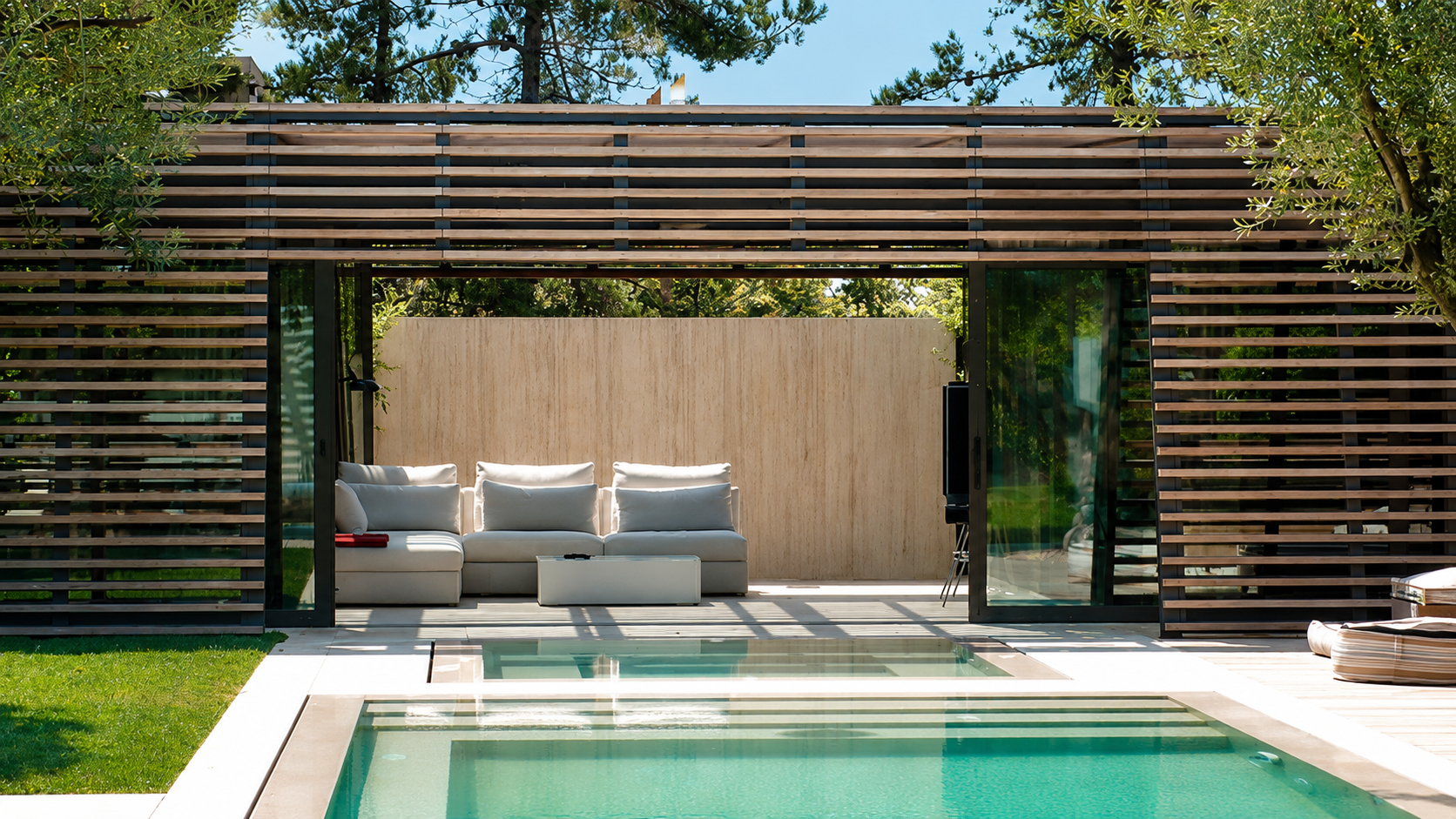
Wood is a living material. As a hygroscopic material, it constantly absorbs and releases moisture according to the surrounding environmental conditions. Outdoors, where fluctuations in temperature and humidity are more pronounced, this behaviour becomes even more evident, causing small expansions, contractions and movements that are simply part of its nature.
Understanding this process is essential to caring for wood properly. The objective is not to prevent wood from changing—because that is impossible—but to support its natural movement so that it occurs in a controlled way. Good design, proper installation and appropriate maintenance are the keys to preserving its beauty and durability for many years.
The Importance of Making the Right Choice from the Start
Proper maintenance begins long before installation. The choice of wood species, the type of cut, the treatment applied and the installation method all determine how the material will perform over time, especially when exposed to outdoor conditions.
Not all wood species react in the same way to moisture, sunlight or temperature changes. Denser species with natural oils offer greater resistance, while others require specific treatments to ensure long-term durability. Choosing the right material from the beginning is therefore the best way to achieve lasting performance.
Finishes That Protect Without Concealing
Finishes play an essential role: they protect the wood without altering its natural behaviour. Products such as oils, wood stains (lasures) and microporous varnishes create a protective barrier against UV radiation, moisture and other weather conditions while allowing the wood to breathe and regulate its moisture naturally.
Over time, this protective layer gradually deteriorates due to exposure to sunlight, rain and changing temperatures. This is not a defect—it is a completely natural process. Good maintenance therefore involves renewing these finishes at the right time, before the wood becomes overly exposed and its ageing process accelerates.
Sunlight and Colour Changes
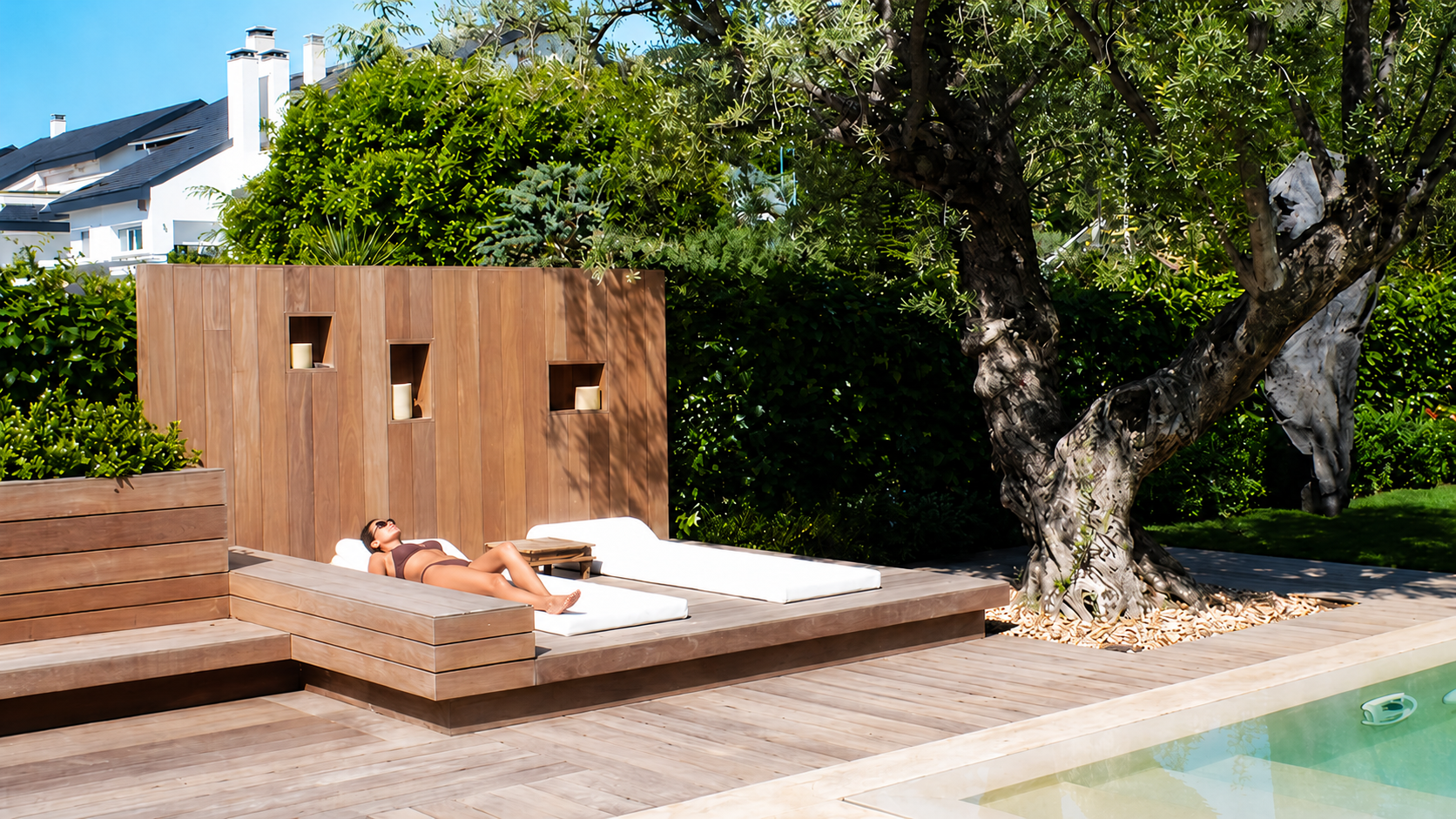
Solar radiation is one of the main factors influencing the ageing of outdoor wood. Continuous exposure to UV rays naturally causes surface degradation, gradually changing the wood’s original colour into a softer grey tone. Far from being a flaw, this transformation is part of the material’s natural ageing process and, in many cases, is highly appreciated for its aesthetic value.
When preserving the original colour is important, applying UV-protective finishes and renewing them periodically is essential. After all, maintaining wood is not about preventing change, but about deciding how that change should take place and helping the material age in the best possible way.
Maintenance as an Ongoing Commitment
Outdoor wood does not require constant intervention, but it does benefit from regular care. Periodic cleaning, checking the condition of protective finishes and renewing treatments when necessary are enough to extend the material’s lifespan and preserve its properties over time.
Rather than restoring wood to the way it looked on the first day, maintenance is about preserving its balance. It means supporting its natural evolution, protecting it when needed and respecting the way time transforms a material that, precisely because it is alive, never stops evolving.
Designing with Awareness
In fine woodworking and joinery, working with outdoor wood means going beyond simply selecting the material. Every project should be designed with its future environmental conditions in mind, incorporating construction details that naturally protect the wood. Roof overhangs, drainage systems, ventilation and proper clearance from the ground are all elements that directly influence its long-term preservation.
Good design reduces the impact of external factors, improves water drainage, encourages ventilation and allows the wood to age more evenly and predictably. For this reason, the durability of a wooden element depends not only on the chosen species or its maintenance, but also on how it is integrated into its environment and on the decisions made long before installation.
A Material That Evolves—Outdoors Too
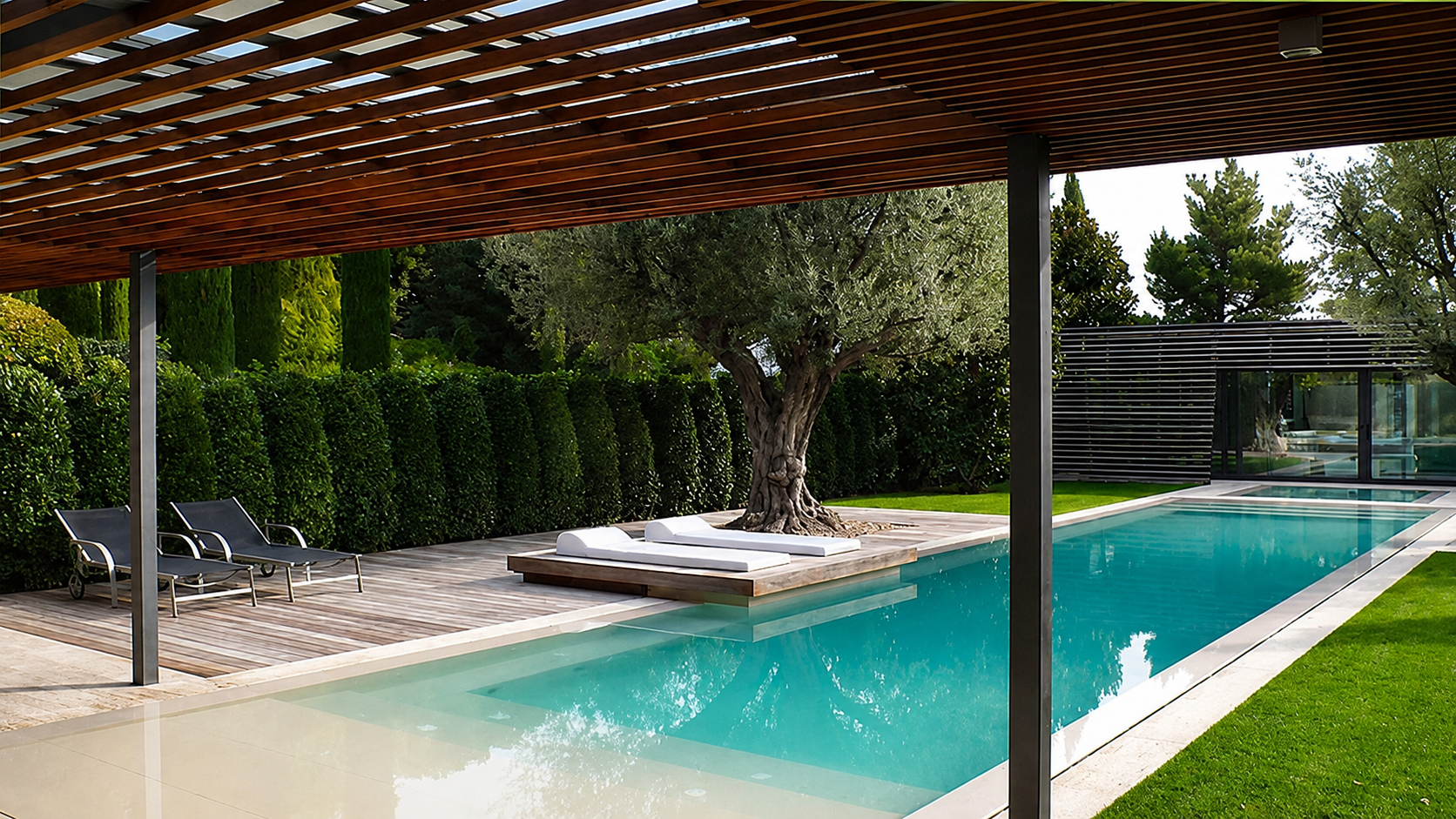
Just as it does indoors, outdoor wood is a living material. It changes, adapts and responds to its environment over time. Caring for it means understanding this process and supporting it with knowledge, respect and sound judgement, intervening only when necessary so that it can continue to evolve under the best possible conditions.
Because the quality of a wooden piece is not defined solely on the day it is installed. It is also built over time—in the way it ages, in how it is maintained and in its ability to preserve both its functionality and its beauty year after year.